
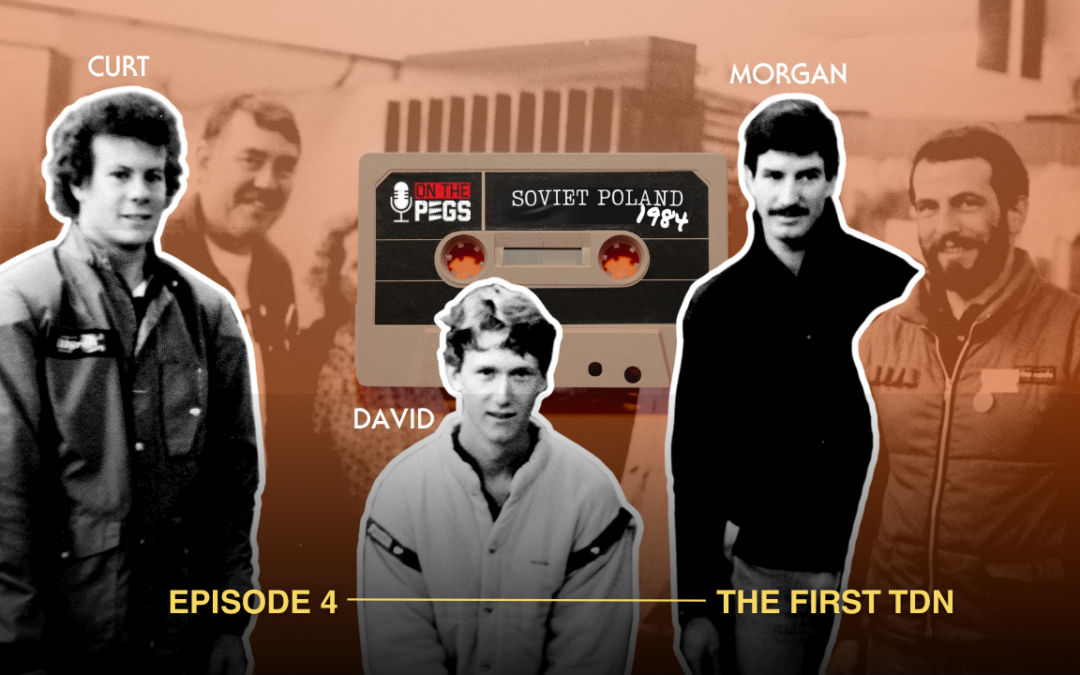
This is the full transcript of Episode 4 of the On the Pegs Podcast featuring David Pyle and Curt Comer discussing the 1984 Trial des Nations.
Abigail Buzzelli: Welcome back to the On the Pegs Podcast. I'm Abigail Buzzelli and today's episode is a special one recorded in the AMA Hall of Fame in Pickerington, Ohio. In this episode, I sat down with David Pyle and Curt Comer to talk about their experiences competing at the very first Trial Des Nations in 1984, held in what was then Soviet-controlled Poland. Both riders were part of the US effort at the historic event, and this conversation marks the first time they've ever sat down together to reflect on that experience. Having just attended the most recent trial des nations in Italy this past September, it was really interesting to hear their stories and compare how the event began with what it grown into today. We talk about the challenges of travel and competing internationally at the time, the unique circumstances surrounding the first TDN, and the excitement of representing the United States on the world stage. Let's get into it.
Abigail Buzzelli: Curt, do you wanna go ahead and kick us off with your background and experience? Tell us a little bit about yourself.
Curt Comer: Sure, I'd be glad to. So, you know, I grew up in a motorcycle family and my dad and my uncle they rode enduros, but at some point along the way they decided, or at least my dad decided that trials is pretty cool and we we you know, he started riding trials and I was twelve when I started riding and we pretty much started in trials and rode in the southeast. There was a new South East - series started in nineteen seventy four and Then I kinda progressed up through the ranks and that. And then in the mid seventies was really kinda I always call it the glory days for trials because you know, there were more bikes sold back then and a lot of events and you know, there were Honda well, there were Bultaco Montesa and Ossa already pretty well established, and then all the Japanese brands Honda Yamaha Kawasaki and Suzuki entered into the - market and of course that put trials bikes on the floor of like every dealership so there was a lot of visibility and local clubs and that sort of thing. And I guess where I was just blessed is because I kinda came good during that era and there were you know a number of paid rides since, you know, all these manufacturers filled in teams. And, you know, as a kid in high school I certainly had a dream of riding motorcycles for a living and so that that just kinda worked out.
Abigail Buzzelli: And you rode for Kawasaki?
Curt Comer: I rode for Kawasaki and nineteen seventy five and seventy six and that was a wonderful experience. My relationship with The people I interacted with with Kawasaki was great. The bike was really good and very supportive. but then they were like the other Japanese manufacturers, I guess their sales didn't meet their expectations and so they pulled out of the US market. So at that time in nineteen seventy seven I went to Montesa as a sponsored rider, from Cosmopolitan Motors was the importer. And I rode for them and the Montessa you know, for the most of my championship years I had, you know, a few experiences on other brands, but I kept coming back to Montessas and in fact that's what I ride now is - is a new Montessa or newer. But anyway, yeah, that was the background. I started riding some world championships, at least the US rounds in seventy eight and seventy nine and eighty. I got the opportunity in seventy nine to - spend some time in England. So I rode had an ACU license and rode British Championships, - not the whole series, but rode British Championship events and and world and the world championship events that I could get to. And so that really just kinda I don't know, I you know, I progressed during that period of time. I was young and hungry and you know, enjoying the lifestyle. So was able to come back and win the US Championship in nineteen eighty one and - you know, and that's kinda been wonderful, you know, the old timers still remember that, so it's a prideful thing I guess. But it opened a lot of opportunities. I had full Montessa factory sponsorship in eighty two and then moving on to the trial des nations so - like you mentioned David and myself and Morgan Kavanaugh were the US team at the first trial des nations and it was in Poland and what an experience that was.
Abigail Buzzelli: So perfect. And David, can you tell me about a little bit about your career in trials leading up to the first TDN?
David Pyle: Yeah. so I started riding - trials in - nineteen seventy two and I wanted to ride motocross and my father insisted and his business partner insisted that I learn to ride trials first riding motocross just to get some skills. And luckily, - that that worked out really good because I went to my first event and I got a big trophy. as a kid there was like thirty of us in the kid class. Anyway, I got a big trophy and and I was hooked. So shortly after that, a couple of years after that I got a proper trials bike instead of just a mini bike and - continued to progress up in the Pacific Northwest and - moved up to the expert class and then started riding nationals and a little little bit similar to Curt, not not quite to the same level. I never lived in Europe, but I I went and rode the Scottish Six Days and got some experience there and rode several world rounds in 1983 in France and Austria and stayed with Terry Michaud and Bernie Schreiber and just you know worked with those guys and practiced and trained and then basically was able to live the trials lifestyle with you know working for importers. I worked for the SWM importer and the Fantic importer so we automatically were going to all the nationals and an opportunity, you know, to to see the country and get some experience riding and learning to work on motorcycles, et cetera. And - yeah, and then and you know, fast forward a little bit to nineteen eighty four. when they announced that there was gonna be this Olympics of motorcycle trials and and we knew what Motocross des Nations was at that point. you know, it was it was exciting to hear about it and and then it it kind of evolved into, you know, the opportunity for us to go and attend, which is a whole a whole story. It's actually quite amusing, the you know, our trip and how that unfolds. and and what we did while we were there.
Abigail Buzzelli: So the US gets notice that this is going on and by the US we mean who who announced it, how did they figure out who's going to the TDN? You know, what what was that like?
David Pyle: I don't I don't recall exactly, but - I do know that - Marilyn Wicker was involved with the initial fundraising. I'm pretty sure that can't remember the AMA rep at the time. I think it was Connie Fleming. Yeah, that's that sounds just recently retired if I recall. Yeah. Yeah. So there was an opportunity. So they they talked to each of the manufacturers at the time, the importers to see who would be interested or would, you know, would they be able to support. And And you know, who would the prospective riders be. And - Curt and and - Morgan Kavanaugh and myself were agreed upon with that group being you know the the riding ability was was one qualification, being good ambassadors for the United States was another, being good mechanically because we were gonna be going over there unsupported. Just we brought our own tools. brought our own motorcycles as our luggage. So we had to be mechanically inclined enough to to be able to support ourselves with little to no spares and - we they wanted riders that had experience traveling abroad. And so we all fit the bill there and we were, you know, pretty easy going, easy to get along with. We all were you know, good we were good teammates, you know, we we worked worked well together. And yeah, so the selection process was very organic - at that point and because it was the first time there wasn't an official sequence or anything, but yeah, that that was yeah a lot of fun and then Marilyn did all of the fundraising herself. She went to every national and they had t-shirts made and she would sell the t shirts and take donations and she put in a lot of work and you know this is before the internet we had no idea
Abigail Buzzelli: It's incredible and I'm sure it was so I mean it can be abstract if there's not a rider present when you're trying to fundraise now and people know what it is, but when no one knew what the event was to try to fundraise for this ambitious thing probably had to be very difficult.
David Pyle: Yeah, yeah. Really the only way it was advertised was on site at the nationals and and club events. But what was the predecessor, it was the you know, it was basically the first trials publication in the United States. It was in newspaper format, it was trials competition USA. And prior to that it was Plonkers Press. But - they ran a lot of ads and you know there was a form that you could clip out and you know out of the newspaper and and send it off to get your shirt, chuck the box of you know, large X or large double X and and and you could you could order it that way via mail, which nobody would even think about now. So people were really really supportive to take those extra steps back in the day because now you can't hardly get anybody to. - To - you know pick up a piece of paper and and you know mail something, and it has to be online for anybody to donate, right?
Abigail Buzzelli: Absolutely, and I think it's so cool - how many through lines there are organizationally from you know all the way back to 1974 to now, even but with Plunker's Press I believe that has eventually become on the pegs.
Curt Comer: Exactly, exactly. The the level of full circle that is plus on the peg still does advertise. Advertising for the TDN fundraising and that's really amazing how how much has changed and how little has changed. Yeah. It's absolutely amazing. And and just like now with On the Pegs, you know, we all sit around and wait. - is it when does it come out? When does it get it hit? You know, it I I just got the email or the text and I can see it now. The same thing back in the day with Blanker's Press. You would wait at the post, you know, at the at the mailbox and get that. Piece of paper out there, and I still have stacks and stacks of them. So yeah, you're right. It's - it's it has come full circle, it's pretty cool.
Abigail Buzzelli: So the location of this trial des nations, it just it wasn't just a Europe trip, but on top of that, it was in Soviet Poland. Yeah, and so can you tell me what it was like to get over there? Can you tell me what it was like to be received there?
Curt Comer: Well, sure, and you know, and to kind of elaborate on what David was saying as as us having to we didn't have team support we had to carry on bikes and spares and that sort of thing. Well it was kind of the same for everybody because you know the factories really couldn't just get there either and and set up and of course the the support then isn't what it is now but you know no big haulers, transporters or whatever, you know, but we did have you know factory support like at the world rounds and stuff. So if we had an issue we could get apart or technical or whatever. But that wasn't necessarily the case at TDN, at least as I remember. And being that it was a Soviet block country before, you know, fall of the Wall or whatever, you know, the folks, the road trials there, the locals, you know, you know, just incredibly enthusiastic individuals, but you know, they were also hungry for Western goods because they were riding on Soviet made motorcycles or PKS, I think was - a Polish brand that a lot of them You know, and of course we've got the the fancy spancy riding gear and trous helmets and Pirelli tires or Michelins or whatever it was back then. I think we were Michelins by then. You know, and they couldn't get those things. So so anyway, getting there and and setting up the bikes and everything was a - Well, it just took some planning and effort. and I'll even - talk about that a little bit. But what was interesting also is like, you know, when I left, it's like my bike was raped. I mean, you know, there were no shocks, there were no tires, there were no grips, every t shirt I had, every sticker I had, I traded it for valuable stuff, you know. 'Cause they couldn't get that, you know, so I got leather goods and all kinda keepsakes to take home with me. And I always say a good deal a good deal when everybody's happy and they were so happy to get stuff that they couldn't get that they were willing to trade things that were of value to me. Yeah. For you know and also, you know, when kids want your stickers and stuff, it's like, you know, it's flattering. So - so I mean that was certainly a dynamic. and you know, and I I learned a lot about, you know, the dynamics of the world and you know, the politics and stuff during that trip because that was you may remember, you know, that Lech Valenza Solidarity movement was going on then. So there's a big labor, you know, movement. I wouldn't say civil unrest, but there was there was a labor movement going on in the It wasn't smooth. So it was bumpy. Yeah. And so, you know, everything in those Soviet countries, you know, it was interesting that there was a like a little black market, you know, free market or it or cap capitalistic market, you know, but it was black market. It was you go to the city squares and you could buy and trade for stuff, particularly if you had Western currency. But like people would shield you so, you know, like the authorities wouldn't see the transaction. And it was it was kind of exciting. But I don't know, we so there was a bus company Debniki that was the sponsor of the club that hosted us. And so you may remember Christoph Kimichikievich was the club trainer. That was like his job, you know, nutrition and fitness and all this for the Debnik bus company trials club. It's like how cool is that? Well I got to stay at their house. And it was interesting because he was actually East German, but he would live in Poland. And he had just enormous library and what I would call his den, you know, of his apartment. They call it a flat. And - you know, he was well versed in various languages, but also, you know, he's showing me some of his literature and stuff, and he said, yeah, this this one is really no no. you know, in Poland, like, you know, whether you whatever it was. And - but his daughter Monica, Monica does Monica, was studying to be a pharmacist. So she had to learn English and obviously Latin for the medicines. So she was our translator. And so anyway I just I learned a lot staying with them. They were a very warm Loving family with passion for motorsports and Then there was another guy you may recall, Yasik Roskowski.
David Pyle: Yasik Rukowski, yeah. Yes.
Curt Comer: So he was a he was a treat. He was. So he picked me up at the airport and this Yugo like a mustard yellow Yugo. so and we can go into how we got the bikes there. But nonetheless we we shoved all the bikes my bike in all my crates, my bike, my engine, my wheel. My tools, my riding gear, and the back of this Yugo and he sets off in Yassick, if you remember, David, he was just wide open. Everything he did was like a hundred mile an hour, 110%. It he spoke fast, he drove fast. So we're leaving the airport and we're like almost squealing the tires and going around the roundabout. My bike shifting in the back. And he reaches over and whips open the glove box and out on the dash a fussbuster and he just laughs. Very illegal and He's so happy to show me his Fuzbuster. Yeah. Yeah, I totally remember that. He he had a name for it. I think it was Sergeant. Yeah. So he he served he was what was he, a crystallographer or something? He was and - so he was a professor at at Krakow, I think, university. But he did a spell at where was it, Washington University or somewhere in in the mid-Atlantic? I I'm not sure where it was, but yeah, he had been in the US for a little bit. Made a point that you know they didn't allow his wife and his son to come, you know, but he did like two years. And in his typical broken English, wide open conversation style, he he he assures me that since he's been there, he's practically American and he even had a Buick. So I'm like, okay, I like this guy.
David Pyle: Yeah, yeah. He was he was fun. He was a lot of fun.
Abigail Buzzelli: It sounds like a really warm welcome from the people, which I'm sure going into that situation. situation you weren't exactly sure what you were going to end up with.
David Pyle: Mm-hmm. Absolutely. I mean once you got through customs, it was unbelievable. The people were, you know, friendly. Even even the people on the street, not the motorcycle people obviously, we were family. But even the people on the street, you know, they they like loved their kids and wanted a better life for the kids than they had, and they were friendly and open and helpful and we stuck out like a sore thumb. Well because we had USA colors on. Yeah. jackets and you know shirts or whatever. And everybody else we're wearing red, white, and blue and everyone else is wearing gray and brown. Yeah. And yeah, so there was no hiding us. I mean we we s again, we stuck out like a sore thumb. but yeah, e everyone was, you know, really, really wonderful. No bad experiences with anyone. Yeah. And they're you know, they were craving outside, you know, what what's it like? You know, what tell us tell us about where you're
Curt Comer: well with that, not to interrupt but Monica's we're listening to well, we're listening to some radio, so she's translating, you know, the propaganda and then we find Radio Free Europe and we're listening to that. But what she translated me at the time we were over there there was a General Motors had a labor strike going on. And they you know, the spin that was put on that, you know, by the government radio, the propaganda of, you know, the Western economies are terrible, the government's terrible, look what they're doing in USA now and they're just, you know, indoctrinating the people, how how terrible all that is. But I think, you know, the bulk of the people in Poland by then had They had knowledge of what life was outside of Poland and that's why the Solidarity Movement was was taking route and you know, eventually they you know, things changed and they got their freedom and and here we are. Yeah.
Abigail Buzzelli: So you disassembled your bikes, crated them boarded the plane to this new adventure. How far before the TDN did you arrive? How long did you have to get your bike back together? You know, what what were those logistics like in preparation? Did you was the format anything like it is now? Did you get to walk the sections in advance?
David Pyle: Yeah, so we had - we I think we traveled on Monday or Tuesday. And then there was no section walking, nothing. It was we rode on Saturday morning. That was it. And every you know, it's just you had your start minute and we I don't I don't recall that we got to start exactly together as our, you know, team riders, like you know, three minutes. We got split up and all of the all of the other riders were split up. So you're you were mixed up with everybody else. They didn't it was kinda like just your regular trials. You walked the sections in your item. Yeah, it was a regular FIM, it's like a world round. But - yeah, we we took our bikes a apart, carried them as luggage one one piece of luggage was an engine one piece was front and rear wheel and we zip tied those together and and wrapped the chain around the sprocket fenders on the top of that and then another piece was the we did the front forks and the swing arm shocks etc and and so it looked like a little horse and we we made Canvas covers for these so that you you didn't see what was in them, but they looked very strange. We carried our own engine oil because we didn't know if we would be able to get engine oil there. These were two strokes, so we had to carry our own premix. we carried s you know, small tire pumps, you know, to air the tires up when we got there, and and it was - it was quite a mess. A funny story about the oil we had to carry, Chuck West was the team manager. And Marilyn you know, she helped with the des nations and got all the fundraising. But - Chuck was the mechanic and team manager. Well, Chuck didn't have luggage to carry as motorcycle parts, so we gave Chuck all the engine oil. Well, somewhere along the trip, one of the engine oil bottles burst or broke, and we get to Warsaw and we're unloading all the bags and the s the whole side of his bag is oily. And we're like, - no, that's too bad. Well then he opens it up and all of his clothing for the trip was saturated in it was Calgard oil which has molybdium in it and it so it's got metal. It looks like it had it it looks like used oil. It was black and it was terrible and all of his oil and it didn't wash out and we didn't have access to a laundromat or anything like that. So it was it was challenging just from But - so we we got all that stuff. Yatzik and and is it Christopher or Christoph? Kristoff. Yeah, Christoph got us to a location where we could put the bikes together. And keep in mind the entire time that we were in Poland we had escorts. We weren't allowed to be in country without an approved Polish national escort. Now it wasn't state assigned But these guys had to be vetted out and qualified that they were okay for when you went through customs that was part of the paperwork you did. So you had to exchange your currency. Of course I hid some Western currency. That was that was really handy. And but anyway you had to exchange your currency and you had to say state your purpose, how many days, where you were staying, who you were gonna be with. Yeah. And their contact. So yeah that part of yeah which getting in the cusp which honestly I was completely good with 'cause I was like, you know, we've s landed on a different planet. w with I mean I have to this day I have one Polish word that I can remember and it's jękuye, which is thank you. I said thank you a lot and that's all I can remember that that I learned. but it was nice to have those guys and they they would they'd take us to breakfast, lunch and dinner. We went to so the state, because we were athletes, we qualified to go into the state run. cafeteria for athletes. So we actually went to a training facility and this cafeteria and there's all these athletes in red jumpsuits with white stripes and the Polish flag and it was gymnasts and swimmers and all these people, they would go to this one location and get the good food. Because you couldn't just go to the grocery store and get stuff. So we, you know, and Yachtik and Christoph ate with us and they were super excited because they had they're like, This is special, you know, and and it was a little ball of cottage cheese and a and a a little trout and tomato and a bowl of porridge and that was that was breakfast and they were overjoyed and we were all sitting there looking going, is this all we get for breakfast? You know, and and they were they they thought it was special. And they they were thankful that they were hanging out with us because they got, you know, they got to eat like kings for a day. but i anyway it was it was we were with them the whole time and - that was a it was a huge blessing. to have them and get to meet them and and know them.
Curt Comer: And what I was going to just say that is that there was gasoline rationing going on during that time and they had squirreled some back, maybe they had resources through Devniki or whatever to make sure that we had enough gas to
David Pyle: I forgot about that. Yeah. Yeah.
Curt Comer: So but you know, I mean it was quite an experience. It really it really was. I mean and the people were wonderful.
Abigail Buzzelli: You'd both been to Europe already competing and you knew some of the other riders did you did you get to share that experience with some of the riders from other countries who you already knew that came for that event? What what was that interaction like? Did you get to prepare it all with them or were was there any kind of paddock area where you could prepare?
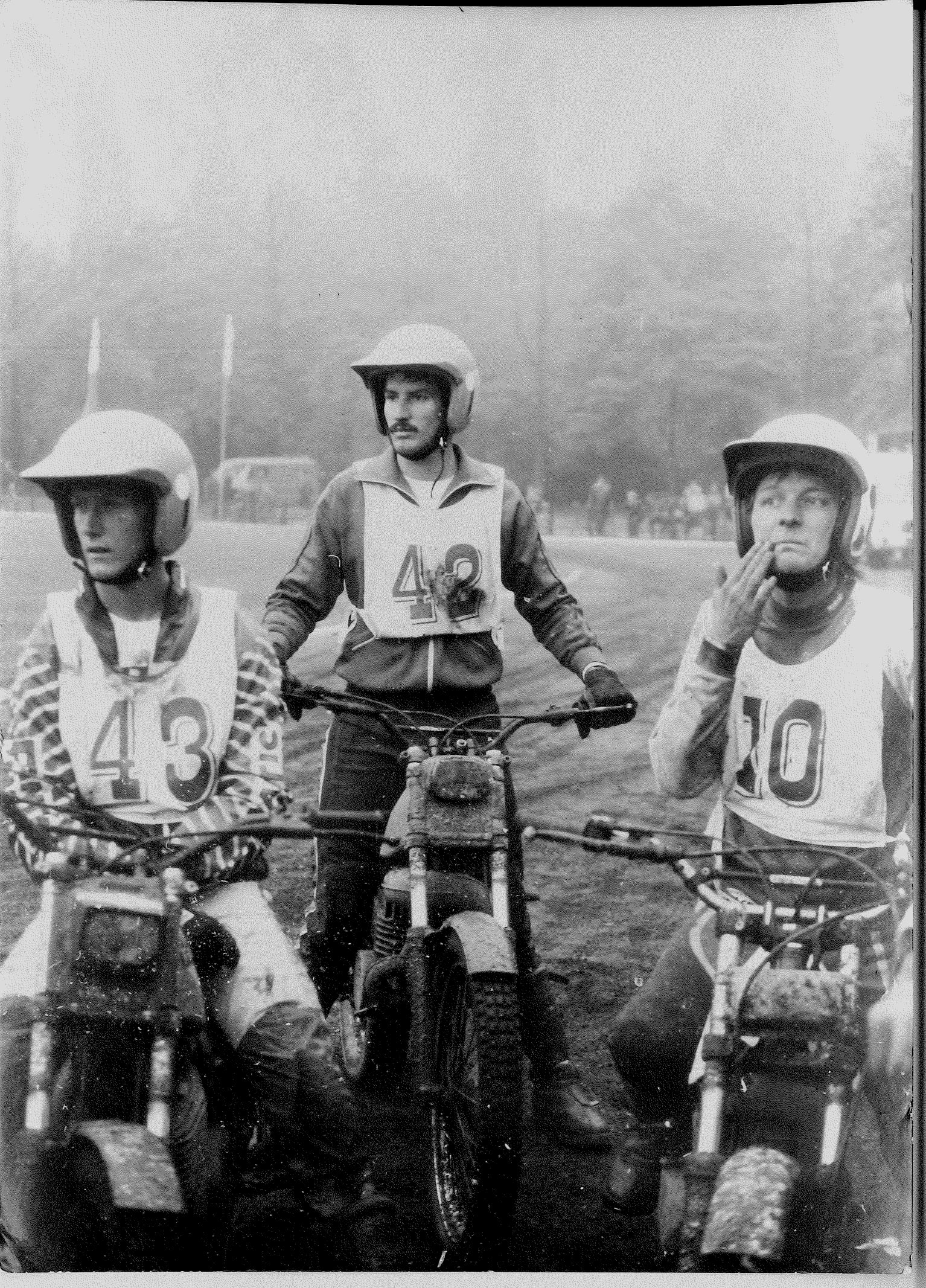
David Pyle: Yeah, there it was a there was a very small paddock. - and like Curt mentioned earlier, there's a very limited number of vehicles. I think most of the riders arrived in their own personal that some of them drove fans. Like two guys would go in a van. I think there may have been a small Fantic van or - and beta which that you know Morgan rode a TR thirty-two, the very first beta single shock trials bike. It was the first one imported into the United States, is the one that he rode at at Myslenica in Poland at the TDN. So it was his national bike. He was riding the nationals and he took that over. So - we we did get to see, you know, friends that we had relationships with, etc. we got lucky because Yacek and Christoph took us to a little practice area where we could we could actually and it it wasn't approved or anything. We just rode our trials bikes down down the road and went out and and got to go ride and practice. But I don't I don't recall any of the other riders none certainly none of them rode where we rode and there wasn't an official practice area at the venue. it was a high school that we rode out of and it was a a cinder running track was in a soccer pitch in the middle were the start of the venue.
Curt Comer: Right. And you know, it was amazing so it was like all the townspeople showed up, you know, and they're coats and ties, you know. And - but all the townspeople showed up. So there was lots of spectators. I mean that's something big that came to their their town or their region or whatever, and they're not gonna miss that 'cause it's, you know, a big deal. So it a little a little story about traveling over there because I know you touched on that, but - so I traveled separate actually and I had a Montessa Koda two forty two. so fiberglass gas tank. So I packaged things like David said, the engine was And okay, and then the the wheels were and the forks were no other zip tied together and the chassis is all bundled and some tools and stuff. But this fiberglass tank seat unit, it's like, ooh, that could be easily damaged. So this obviously before TSA, that was my carry-on baggage. my goodness. I didn't know that. yeah. So I flew from Chattanooga to Atlanta and then changed planes to go to Atlanta to Frankfurt. And walking down the jetway or whatever, you know, and then airport. I don't know if it's security or whatever, but a very official looking lady stopped me and inquired about what I was carrying and I said, Well, it's a vessel. Well what kind of I said, well, it's a container. What kind of a container? Well, for liquid. Anyway, she eventually had it out of my hands and the gas cap off, and she's smelling it. It's like, there's been gas in here. I said, yes, but I scrubbed it really good. So this this evolved into quite the conversation. So, you know, I'm out with my FIM license, my entries, explained to her that I'm Representing the United States and this is fiberglass, it's very fragile and it has to go. And anyway, I just wore her out with you know, with words and she finally just said, Go on and so anyway, it went on carry-on luggage with me, so we flew, then Atlanta to Frankfurt, then Frankfurt to Warsaw. Then I took a domestic flight from Warsaw to Krakow. Yeah. So the no jet ways there. It's like well, in going from the international airport to the domestic airport In Warsaw was a whole nother trip. You know, I'm in a cabby, what is those things, a lotta fiat under lice a lotta. And of course the cabby I got my map. I don't speak in Polish, but I can see which roads and we're going around the world. He's running up the fair. Anyway, we we point and you gesture and whatever and he gets me to the airport. So so there's no jetways or anything, so you know you're and of course you're in a Soviet blocked country now. And - so you know you're waiting and then your plane's ready, so everybody walks in a line. Let's see, I don't think we had a bus. I think we walked from the lobby or whatever to the plane and then there's these steps going the back of this turbo prop Soviet made plane. And - I go in and there's like a guard in the back, back seat. Yeah, he's got his rifle, whatever, I nod as I go by and anyway, you go in and just the whole experience. I mean the seats were like aluminum frame with that nylon webbing like a you know, patio chair. And I'm lined up - so they seat me by the wing, you know, and I'm lined up with that prop, you know, and we start to taxi out and that thing's out there the window wow wow it's lined up with my head. You know, and he's trottling it up and think, man, I hope that the blade doesn't come off of that thing. So that was the experience. But we take off and then Stewardess comes along with this bowl of hard candy. And in America used everything individually wrapped and all and this is just a bowl of candy and everybody's just dipping in and grabbing some and it's like, well, I don't really wanna touch that, but other people have, but you know, I wanna fit in, so I got me some. You know, and as we go on up in altitude it's like I realize why the hard candy it's like their - cabin pressure wasn't so great and it's like you need to swallow and adjust your ears or whatever and so anyway we're fine and we get closer to Krakow in this big storm and I mean this plane is like all over the place and you know and I'm I'm hanging on and then you know you can see the landing lights are out and through the rain and the fog you can start to see the ground and I mean we're just all over the place and I'm thinking one brace and I was like, ooh, this one's gonna be rough and man that guy sat that thing down like he just laid on a pillow. It was amazing. He knew what he was doing.
Abigail Buzzelli: That's awesome.
Curt Comer: And then but that was just kind of a new experience. I wasn't used to the flying around and the arm guard in the back. that was just so people don't defect. Yeah. to keep everybody in, you know, in this country you were always used to, you know, security to keep people out of your stuff. Yeah. You know, that was a different dynamic.
Abigail Buzzelli: It's a lot of effort to keep a people in. Yeah. That's yeah, that's that I hadn't heard that one before. So let's talk a little bit about the actual trial. It sounds like you did you travel between towns for the trial? was it kind of split up like in England sometimes it's across farms what was that like? Was there a city center? What were the sections like? What was the weather like?
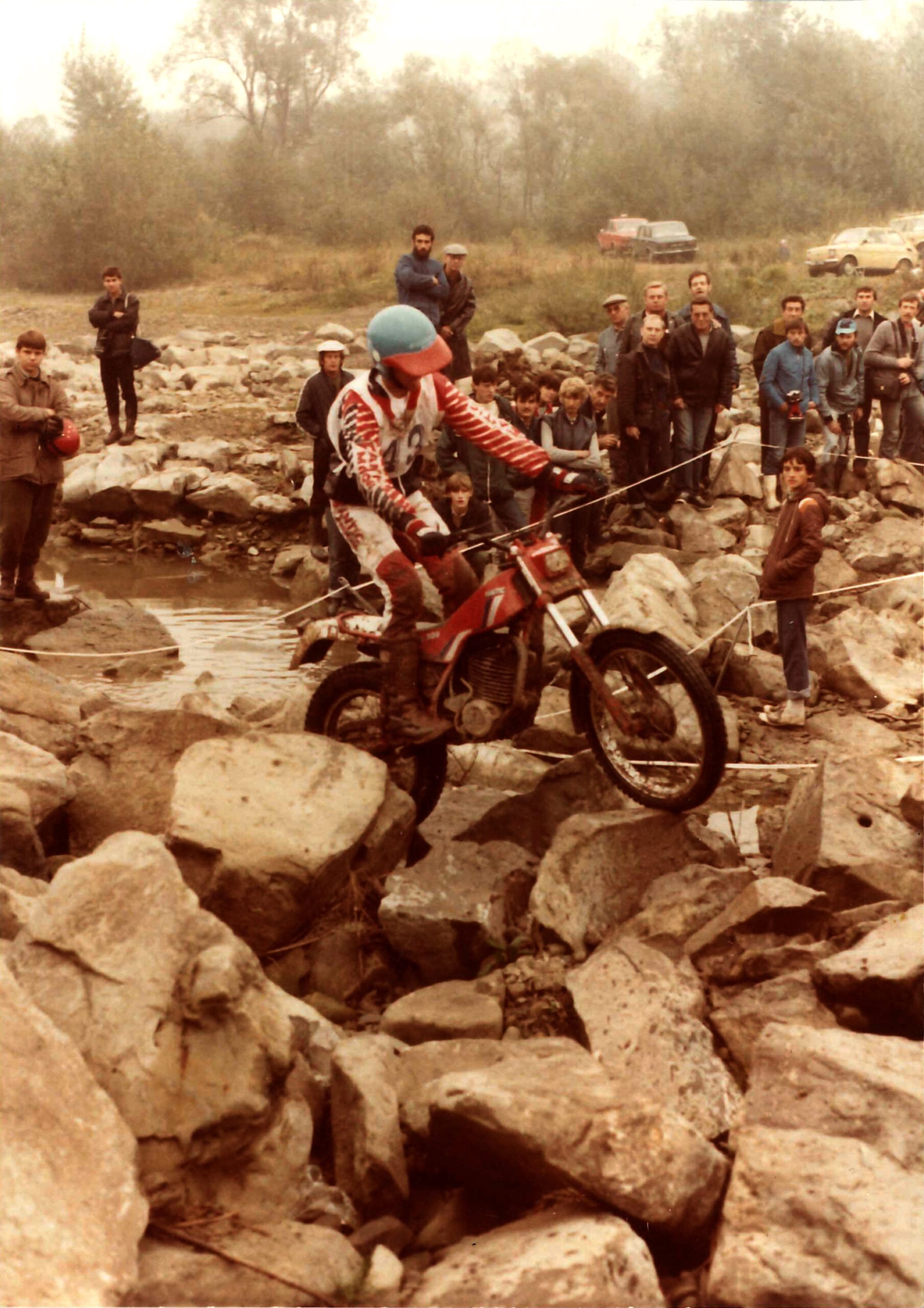
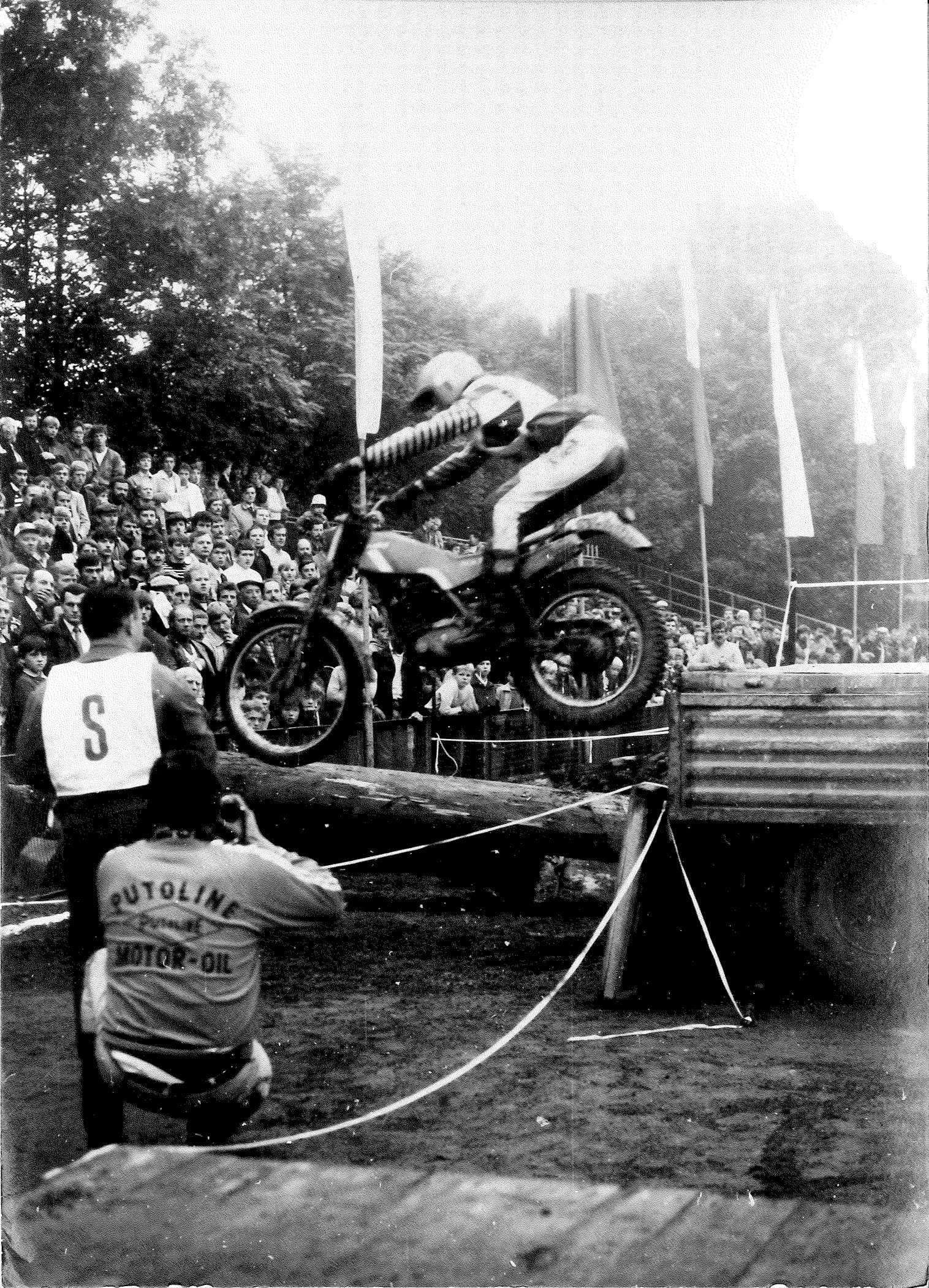
David Pyle: Yeah, so the event started at a high school and it was - a running track with a it was like a little stadium. And that I recall it was so the the terrain was very much like Oregon. So very muddy, wet streams, you know, steep banks that you you would go in and out of and and traction was a was a a big issue. the event itself For me, it was one of the hardest days on a motorcycle ever. It was it was very demanding. It was it was a it was a challenging event. It was a hard trial like a world round was. And this i again the sections were difficult but it was rainy, muddy, and I just remember a lot of pushing and and that and it was a long day. When we finished we had to tear the bikes back apart and and - you know put put back as luggage, although my bike may not have made it out of the country. that actually changed possession in in Poland with some fancy footwork and it it stayed there. So
Curt Comer: Which had to be fancy because we had to have a carnet.
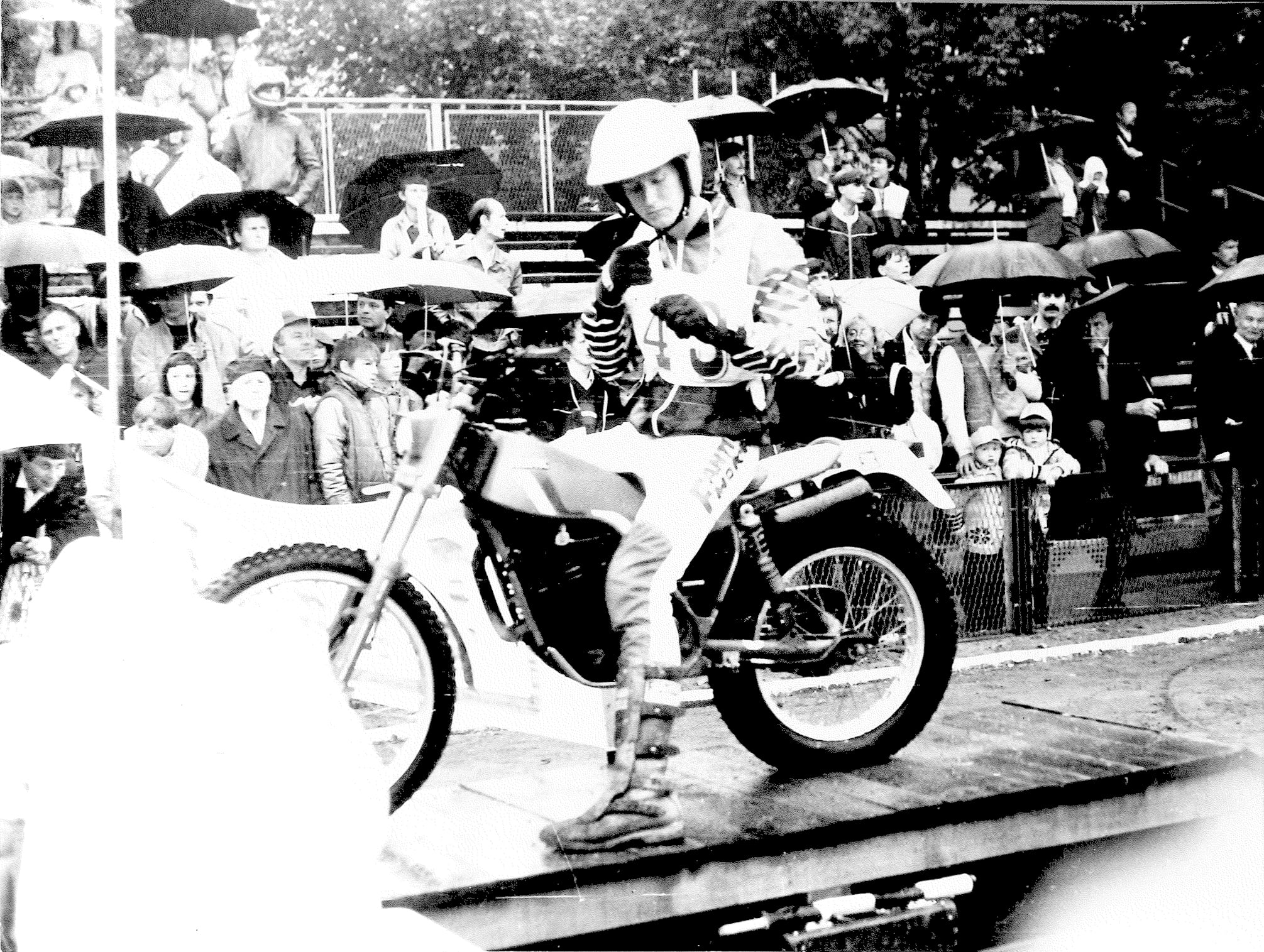
David Pyle: I I know and I don't know how I don't know how they swung it. But Yatzik yeah got my bike. Right. And my boots and helmet and all that kind of stuff. So he was like factory rider afterwards. He got all that new stuff. But but the event was hard. Yes, it was. A lot of a lot of work that you see the pictures of us. There's a there's a great picture of Curt with I think the front fender is broken off and his whole he's just mud head to toe and he just looks ghast. He's just done. And I am and yeah, I was. And then I can remember that. And then we still had to work on bikes and and get everything ready to go.
Abigail Buzzelli: But how many how many sections was it?
David Pyle: if I recall correctly, it was I guess eighteen. Yeah, I think it was two laps of eighteen.
Curt Comer: Yeah. And and like David said, it was very much like a world round in in that era. So, you know, I don't know that we necessarily went from farm to farm, but it was a pretty long loop, if I recall. Yeah. And quite a lot of sections. Like David said, it was raining and muddy and you know, and they were good sections and they were rocky. And I did have some Loss of control of my motor vehicles, breaking fenders and such. And I remember that I was having problems with you know overheating so the mud don't would get clogged in the fence 'cause no water cooling obviously. And - so I was stopping to clean out the fence of the cylinder so it wouldn't overheat. And I think I even broke rear fender. by the time I got done with the trials I looked pretty bad. But - a little bit less to crate up at the end. Well yes. But you know, and it was just such an experience. It was such an honor being there and and and you know, and competing at that level. It's like and we were young too. It's like, you know, those all those - inconveniences, they were just that. They were, you know, yeah. Trials was tough then and that was just par for the course. I mean, you know, we struggled at world rounds and we struggled there. But we did okay. Yeah. You know, I mean that's the thing. We we held our own. even with our challenges. Yeah. So yeah, great experience. Great experience.
Abigail Buzzelli: So did you fly back the next day? What was that like?
David Pyle: - so Morgan Kavanaugh and Chuck West and Marilyn Wicker and myself all went on from there to Germany and we went to Cologne Cologne to the there's an annual motorcycle show there, big with - new product introductions and that kind of stuff. So we went there and I think I think Curt had to go flight back separate. I can remember why, but I didn't go there. So yeah, it wasn't that I wasn't a team player, it's just have different - commitments. Yeah, but we got to stay - an additional day in - Krakow and went and visited did you stay with us to go visit we saw some - in particular an old church, the oldest church in Poland.
Curt Comer: Christian church and it had pockmarks on the steeple on the side from World War Two from airplanes from guns where it had been shot at. And - d di were you there for the I was for that church? I wasn't I did go to the castle. I don't know if you went to the castle. That was before. And it was quite interesting as in Krakow. And I think it was, you know, from the eleven hundred So quite old and like the steps I recall, you know, were stoned but they like worn down from centuries of foot travel. But at the time the I went there with Monika, the - there was a Soviet film crew, they were filming some movie there. So it was kinda interesting to see yeah, you know, them work and it wasn't like, you know, you couldn't you know, you wouldn't like walled off off limits. You could actually see what was going on. It was kinda cool.
David Pyle: Yeah, we were on the Yatzik tour so we both had to do different stuff. But we that the the church that we saw this stained glass that was I mean hundreds and hundreds of years old. and this yeah, it was just a amazing place. and and it was an artifact. When we were there, you weren't allowed to go and worship there. It was just, hey, there's this is something from a long time ago. we were able to walk through it and see it but But yeah, so we were able to spend an - an additional day and - hang out with those guys and then and then we went - and spent another week in Germany after that. But you know I just remembered something funny that the I have this similar story to Curt with - when we flew from Força to Krakow, little tiny plane, and there's one - soldier in the back with a Soviet. it rifle and the kid that was holding it looked like he was probably sixteen. He didn't look old enough to be having a you know an automatic weapon. But when we were all sat in the plane they handed out the little orange candy and then the stewardess in very broken English told or advised that if we wanted to get out of our seat for any reason, we had to talk to the boy with the automatic rifle. We all decided we were just gonna stay seated for the whole the whole trip. But of course. yeah, but it's a absolutely magical experience. I I wish, you know, we didn't have th there's very limited number of photos. You know, it's just our our memories and and you know, talking with Curt right now I'm it's it's jostling all all these memories out of the cobwebs of my mind and and all all the things that we - we were able to do when we were there. We had a a wonderful experience and it was, you know, such an honor to be able to represent the United States. Our helmets didn't arrive. we were all supposed to have Nolan helmets with the the typical ISD, you know, blue skunk or skunk yeah skunk helmet. we were supposed to get those and and I didn't get mine for like six or seven years later. it was it it it had actually come to the AMA and And through you know, just it didn't it didn't end up getting shipped. And I finally had talked with Roger Ansel at one point and he goes, yeah, by the way, I I have this - in my office. I need to s I need to get that to you. So he sent it off to me. So that was pretty cool.
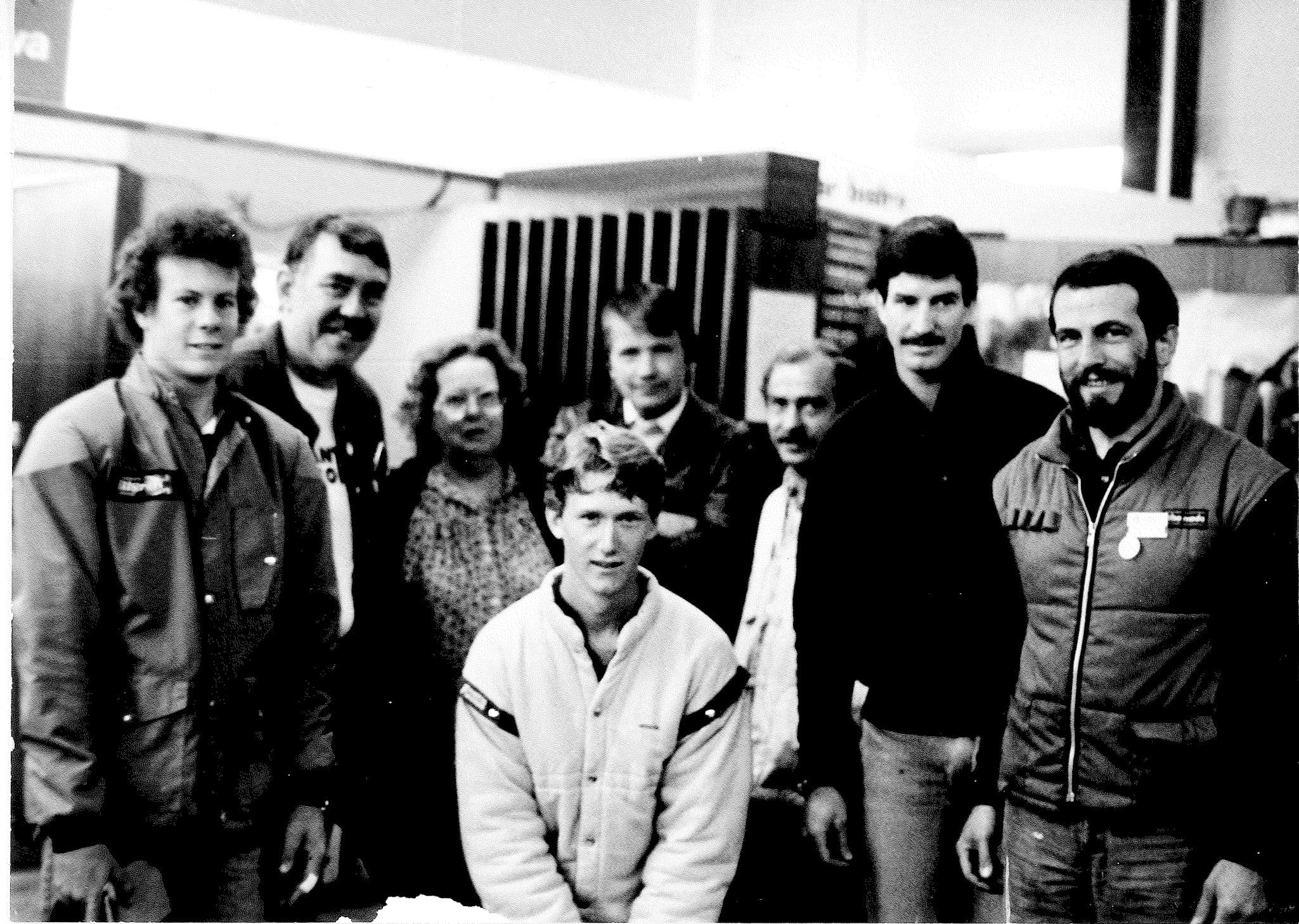
Abigail Buzzelli: - speaking of the photos, thank you so much for digging those photos that have never been circulated before up for this interview. I really appreciate it and those will be in the upcoming edition of on the pegs for you to see. it's amazing to me, aside from culturally it being a Soviet country at the time, how many parallels there are to the current TDN experience having just gone through it. and you know, the amazement at how old the properties and the you know, the buildings on the properties are it was just incredible. The photos from the the twenty twenty five TDN were taken at a twelve hundreds site and we're standing on ruins and we're riding up aqueducts and it's just it's so neat to hear about all of the parallels and all of the through lines, just like at the beginning when we talked about the magazines.
Curt Comer: Yeah. One of the things that strikes me and and you're one of the few people people that I know that can appreciate it we were in the stadium and the each of the teams you know, there there was a girl that held a sign that said USA on it. And then on the on the other side of us, - a girl with an American flag. And it wasn't a really big flag. It wasn't one but we walked down, you know, s like where the hundred yard or hundred meter dash would be in front of the grandstands. We walked along and I I'm getting chills right now. Yeah. you know, just to be honored to do that. And you know Like say sorry I'm getting emotional now, but you're one of the few that there's a s there's a pretty small group of people over the years that have had that experience and and - been able you know, it's is as close as I can think is going to the Olympics and representing your country anyway.
Abigail Buzzelli: Certainly, and it I think that is a really moving experience and they I'm so glad that they have preserved the tradition of the parade des nations at the trial des nations. That was It's it's a difficult contest for my favorite moment of that weekend, but the parade des nations certainly is at the top of the list and now the teams are larger. There's a women's team, there's a challenge team, and whoever the newest members of the team are get to carry the flag or and the sign. And so - this year the two challenge team riders, it was their first time, they carried the sign and I had the honor of carrying the flag. And it was again, it was one of the top moments of the weekend and the way that it inspires you to you know, you're already there very motivated to do your best for your country, but the way that it kind of anchors you to that purpose is is incredible.
Curt Comer: Yeah, yeah. Yeah, well congratulations on joining that group of people for representing representing us well. Us as Americans but us as, you know, fellow Trials enthusiasts and motorcycle enthusiasts. Pretty pretty elite f fraternity.
Abigail Buzzelli: Yeah. Thank you. I appreciate it. And it's an honor to have my names anywhere near your names and in the in the books here. so coming back, you're bringing, you know, you've you're already at the top end of experience within the trials community for having trained in Europe each, and now you're bringing home this incredible experience and getting the next wave of riders ready to do the same thing and and to get to represent the United States. I know personally you've both been wonderful mentors anytime I've been around you at locals or at nationals. what has that experience been like getting to be that role model in the trials community for that and obviously your other long lists of accomplishments.
David Pyle: Yeah. Well I I had the the honor of being able to basically download my experience and some information. I think - probably you know Andy Som and Mark Manico were the two the two guys that would had gone not long after I had gone. And It's a pretty again, it's a it's a pretty small fraternity and you don't you don't get a lot of opportunities. I mean and when I say small fraternity, I mean trials riders in general. God bless you if you ride a bike with no seat, you know, there's not very many of us out there, so we're always happy to share our information and and hopefully you get, you know, someone that enjoys learns to enjoy trials the way we have and have those opportunities and I think both of those guys are are are great examples of of people that did get to to come behind us and you know Curt's Curt's worked with you know guys like Steve McNeil and and some of the you know anyway a lot of you know well this weekend's important because Ryan Young was inducted into the AMA Hall of Fame and obviously he's on campus and riding events with us this weekend
Curt Comer: But - I rode with Ryan's dad and then of course remember when Ryan was a kid on a bicycle, so he's ten years younger than we are, David, but you know, he's we've had a relationship since he was a kid and he was always hungry for whatever I could, give him. and of course the Trial D Nations experience. - he was very inquisitive 'cause, you know, he definitely followed with multiple you know, times on the US team and - and there again he's represented us quite well as a competitor and an individual. And I guess I've probably invested more in him than than anybody, but like you said, some of the guys back home sleeping the on some of those for sure. Yeah.
Abigail Buzzelli: there have been very few men's teams to have won the international trophy ever since they split the championship. Both championships are incredibly competitive. in twenty twenty five the men won. Yeah. And I know you've you've both seen all of those riders come up since they were kids. Yeah. - can you tell me a little bit about what it's like to see, those dreams realized through that team.
Curt Comer: Yeah, it's you know proud proud to be, you know, on the on the first part of it and and you know see I I'm proud of those guys. I mean I I I've you know Josh running around as a little guy - I think I think I've got I think I've saw him with his helmet on backwards as a really little guy at one point. But - and I've known his dad and his mom since before they were married and and that. But seeing those those families progress, I I wasn't around the Myers boys 'cause I was mostly a West Coast guy after - after that. But That yeah, I'm just proud of those guys and just it's great to see growing up and and flourishing and it's such an accomplishment, man. It it's so much pressure. And when you're in that stage with all of that going on, and again you you know firsthand there's there's and it's pressure that we put on ourselves, right? Because of of you know representing the United States. But yeah, it's cool to see their success for sure.
Abigail Buzzelli: - let's talk briefly about what you guys are each doing now in your trials career because neither of you have stepped away from the sport either. And I I love that. I was just talking with Ryan about that earlier today. because I think the the neatest part about his induction is that it's a huge milestone, but it's not an end point because he's so passionate about motorsports and trials specifically. And I think what stands out to me about so many trials champions is that your trials career doesn't end at a championship. It doesn't end when you hit the big goal of going to trial des nations. It doesn't end when you hit those milestones. You stay in the sport. And so can you tell me each a little bit about what you're what you're doing now in the sport? what's inspiring you?
David Pyle: well I've recently retired and - I I I had to take several years away from trials due to work obligations, but - starting again in in twenty seventeen, I started riding locally in in Southern California, SCTA, riding the series there and then I started riding nationals again and - this last two years I was able to ride every national and was able to win the senior support class both f the 2024 and 2025. - helped Daniel Blanc Gagnier this year with NATC National in California and then help with the SCTA with - internally with setting up events. Just last weekend we had a ride after a trials. We left the trials set up and went back out and a bunch of riders and myself re rode the trial. And it was an opportunity for me to show the other riders that were struggling with sections, okay. I I wasn't able to be there during the event, but here let's watch let me watch you ride it and then - I'll critique your line choice or your you know and it it was really rewarding to see them try out, you know, okay, yeah, this is a suggestion, this is how I would do it. and it helped them with their with their riding or helped them lower their scores. it's been fun. I I'm involved with that and then also the for the last two seasons I've been helping US Montessa with - mechanic duties for in twenty twenty four I did the prepared the bike for - Toby Martin and then in twenty twenty five I prepared the bike for Jorge Casales. and both of them - you know won their won their championships. it was kinda fun. many years ago I was a race mechanic at Kawasaki Motors and and built bikes for Baja and riders like Larry Rossler and Danny Laporte and Marty Smith and and a lot of - a lot of guys back in the day and had a lot of success as a mechanic and it was it was fun to to do it again. - and And you know, I I learned a lot from those guys their bikes were a little different than what I would normally do for my setup. but I I enjoyed learning from them and I apply it to my bikes and I think it's it's helped my riding. But yeah, I've been stayed involved and I I enjoy going to the U Cup. I missed it last year due to - illness, but we enjoy that. You know, the Curt and I love love that event. It's a marquee event. Both of us have won it in the past, so we're we're in - enjoy that. I enjoy doing events like the British American Cup in Northern California, which is a a three-day event that Adrian and Mandy Lewis - promote And it's it's kinda like six days, but it's here. And anyway, so doing that, mostly West Coast stuff, but like say these last two years I hit all the nationals. Not sure if that's in the cards for this year or not to be able to to hit all of but definitely the West Coast stuff for sure.
Abigail Buzzelli: Wonderful. And Curt.
Curt Comer: Well, you know, I - of course the sport has changed a lot since our day, David, you know, as far as like the riding styles and everything, you know, the marking and you know, we come from a time where there's, you know, long loops, lots of sections and Well, just different style or whatever, you know. So, you know, maybe I haven't stayed as current as you have as far as you know, the new techniques and and that sort of thing. But being a dinosaur I enjoy those traditional events like you just mentioned, you know, U Cup in particular. And and you know, I even though I may not be as current on some of the new writing styles or whatever, you know, as far as helping helping folks that are - you know, growing in the sport, I think, you know, basics of trials is a very important foundation, and I see a lot of young people, they wanna learn the hops and turn into Tony Bo videos from the get go and it's like, well there's more to the, foundation to be able to then go to those advanced techniques. I'm honored when somebody asks, for my input on their on their writing style. and of course the joy for me right now is my seven year old grandson, He's on a TRS sixteen and - nice and enjoying enjoying trials and enjoying motorcycles and you know that's I guess that's it for me as just a lifelong motorcyclist. trials, you know, has been really good to me and I encourage all my friends, motorcycle inclined people to have some involvement in trials because what you learn in trials, as far as your motorcycle handling skills and everything transition to anything you do in motorcycles, but also the you talked about the community. the motorcycle community, there's life lessons, there's life friendships, there's just a lot of good. And we live in crazy times now, and I always tell Duanakosh, you if everybody just raced motorcycles, they wouldn't have time or money for all this foolishness that's going on in our in our society. And and I guess I believe that. - my motorcycle friends are my my family. And it's where I'm in my comfort zone and - and trials has been really good to me and you know, like the US championship that I won was a long time ago, but you know, it's I guess flattering when people do remember or appreciate or respect that. And and it's helped me in a lot of ways. I mean it's opened doors that I otherwise wouldn't have been able to walk through. So - trials is trials has been very good to me and all the relationships, everything from riders to in particular I I mean I had the best sponsors, Kawasaki Motors was great to me, Cosmopolitan Motors, Larry Wise, I mean he's like a father, and he never rode motorcycles. He just loved trials and trials people. So so lots and lots of good experiences there and you know it was riding the trial to nations is probably an ultimate or a culmination or whatever because you know we did get to do the first one so that was that was groundbreaking but as we mentioned you're representing your country and I mean I still have like enormous national pride and Yeah, it hurts me some of the things I see, but when I see our our Americans - in motorcycles flying the flag and representing our country, that makes me very proud. Yeah. Yeah.
Abigail Buzzelli: Yeah, well said. Think that's great note to end on. Thank you both so much. I greatly appreciate your time and I I greatly appreciate that we were all brought together by the induction this weekend.
David Pyle: Yeah. Yeah, that's awesome.
Abigail Buzzelli: That's it for today's episode with David Pyle and Curt Comer. Guys, thank you both for sitting down and sharing these stories, especially for the first time together. It's incredible to hear firsthand what the first trial des nations experience was like and how it all came together. You can find show notes for this episode over on the On the Pegs website, including ways to support the current US trial des nations team through their fundraising efforts. And as always, thank you for listening to the On the Pegs podcast. If you enjoyed this episode, be sure to subscribe, share it with a friend, and we'll catch you in the next one.
In 1984, three American riders flew to Soviet-controlled Poland. Their goal: compete at the very first Trial des Nations. As a result, David Pyle, Curt Comer, and Morgan Kavanaugh wrote the opening chapter of U.S. team history. More than four decades later, David and Curt sit down together for the first time to talk about that historic week.
We recorded this episode at the AMA Hall of Fame in Pickerington during Ryan Young’s induction weekend. As a result, the conversation kept circling back to lineage. For example, who passed the torch to whom? In addition, how does the work of 1984 still shape the U.S. program today?
David Pyle and Curt Comer on the First Trial des Nations
This is a rare firsthand account of how American trials first stepped onto the world stage. Meanwhile, the parallels to today’s TDN keep surfacing. For example, listen for the parade of nations. In addition, notice the international travel logistics. Finally, feel the pressure of representing your country.
About the Guests
David Pyle and Curt Comer rode at the top of American trials in the late 1970s and early 1980s. For example, Curt won the U.S. National Championship in 1981. He raced world rounds across Europe on Kawasaki and Montesa machinery. David, meanwhile, trained alongside Bernie Schreiber and Terry Michaud. In addition, he competed at the Scottish Six Days before joining the inaugural U.S. TDN squad. Together with Morgan Kavanaugh, they made up the U.S. team in 1984. Selectors picked them for their riding, their mechanical skills, and their ability to travel unsupported.
What We Covered
- How the U.S. team came together with no formal selection process and zero factory support.
- Shipping trials bikes overseas as luggage, disassembled into engines, wheels, and forks.
- Daily life inside Soviet Poland: escorts, gas rationing, the Solidarity movement, and a quiet black market.
- Hosting families like Kristoff, daughter Monika the translator, and Yatzik Roskowski in his Yugo.
- The trial itself — eighteen sections in cold rain, broken fenders, and one of the hardest days they ever rode.
- Connecting Plonker’s Press to On the Pegs Magazine, and how 2025 ties back to 1984.
Logistics, Hospitality, and the Trial Itself
First, the logistics. Curt flew his Montesa Cota 242 to Poland as carry-on luggage. Fiberglass tank in hand, he talked his way past a confused airline agent in Atlanta. Meanwhile, David checked his bike in canvas-wrapped crates with chains zip-tied to wheels. The team brought their own pre-mix, their own tools, and almost no spares.
However, the human side of the trip is what stuck with both of them. They stayed with Polish families. Meals happened at the state athletes’ cafeteria. In addition, their drives around Krakow took place in Yatzik Roskowski’s mustard-yellow Yugo, complete with a Fuzzbuster on the dash. For example, by the time Curt left, he had traded away every sticker, t-shirt, and tire he owned. In return, he came home with handmade leather goods the locals could not otherwise access.
Finally, the trial itself ran eighteen sections in cold rain and Oregon-like mud. Curt broke fenders and battled overheating. David remembers it as one of the hardest days he has ever ridden. However, the team held their own. Walking out under the U.S. flag in the parade of nations was the high point. Forty years later, Curt still gets emotional talking about it.
About the U.S. Trial des Nations Team
The Trial des Nations is the annual world team championship for motorcycle trials, organized by the FIM. Each country fields its top riders for a single day of competition under their national flag — often called the Olympics of the sport.
Since that first 1984 squad of David Pyle, Curt Comer, and Morgan Kavanaugh, the United States has continued to send a team every year. Today, the U.S. program includes Men’s, Women’s, and Challenge class teams, and in 2025 the U.S. Men’s team brought home the International Trophy. However, unlike many European nations, the American team runs almost entirely on rider-led fundraising rather than a federation budget. As a result, every dollar raised covers travel, entry fees, and on-the-ground support for the riders representing the United States on the world stage.